
Kyrgyzstan
- Governance: Republic, unitary state
- Capital: Bishkek
- Population: 7.2 million
- Major religions: Islam (Sunni), Christianity (Russian Orthodox)
- Language: Kyrgyz and Russian
- Location: Central Asia
- The 2025 Economist Democracy Index: 111 of 167 (Authoritarian regime)
Kyrgyzstan is one of the most politically and ethnically complex countries in Central Asia, and the only of the former Soviet republics to have undergone three revolutions. Popular uprisings, regional divisions and disagreements between leading political actors have led to the overthrow of three governments in Kyrygzstan, in 2005, 2010 and 2020. In addition, conflict between ethnic Kyrgyz and Uzbeks escalated to violent clashes and hundreds of deaths in 2010. Since the last revolution in 2020, Kyrgyzstan has seen drastic backsliding on human rights and systemic reversals of democratic reforms.
Kyrgyzstan today
Since his ascension to power in 2020, President Sadyr Japarov has initiated significant changes to Kyrgyzstan’s political system and overseen a reversal of democratic reforms. The new Constitution, adopted by referendum in April 2021, re-established a presidential form of government, transferring powers back from parliament to the president and undoing prior reforms.
The amendments also abolished the previous one-term presidential limits, thereby enabling President Japarov to seek re-election when his first term expires.
One of the main trends in recent years has been the strengthening of state control over the information space and civil society. The Law “On Protection from False Information,” adopted in 2021, allows internet resources to be blocked without a court order if their publications are deemed “unreliable.” Independent media outlets such as Kloop, Temirov Live, and Radio Azattyk have faced blocking, searches, and prosecution. In parallel, in March 2024, a law similar to Russia’s “foreign agent” law was passed, requiring non-governmental organizations with foreign funding to register as “foreign representatives.” These measures significantly narrowed the civic space in Kyrgyzstan and dealt a crippling blow to independent civil society an media in the country.
Along with domestic political repression, Japarov’s tenure has been accompanied by heightened tensions in the border areas with Tajikistan. In 2021, and particularly in September 2022, major armed conflicts occurred between Kyrgyz and Tajik forces, resulting in civilian casualties, the burning of houses, and the displacement of large numbers of civilians. Human Rights Watch conducted an investigation and stated that during the 2022 armed conflict, both Kyrgyz and Tajik forces committed attacks that could qualify as war crimes, including shooting at civilian vehicles, attacking ambulances, and destroying infrastructure.
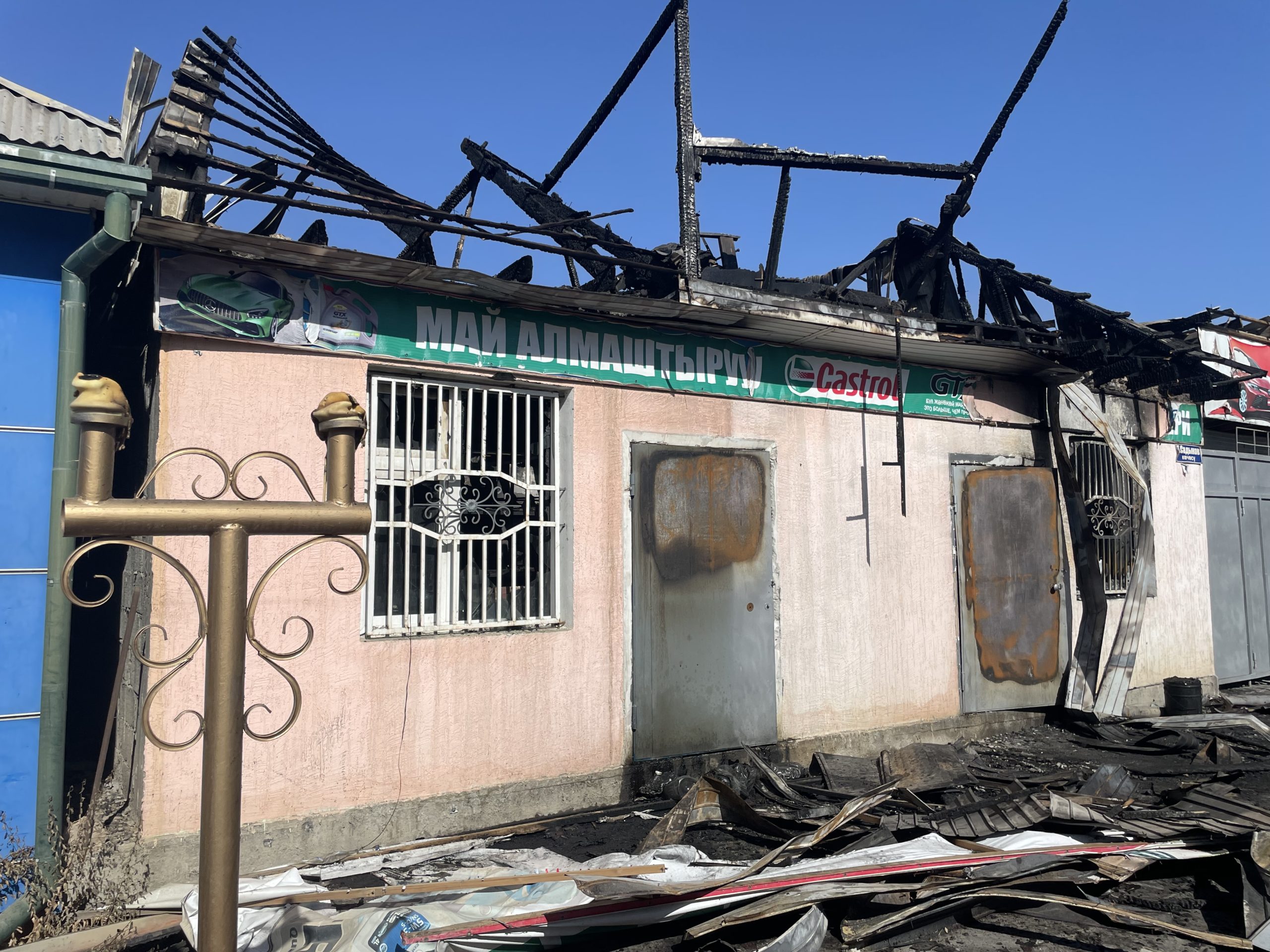
The Norwegian Helsinki Committee visited Batken following the 2022 clashes. During the visit, the serious humanitarian consequences of the conflict were documented: destroyed homes, numerous displaced persons, and severe trauma among local people.






NHC and Kyrgyzstan
The Norwegian Helsinki Committee has been engaged in Kyrgyzstan since the late 1990s, with repeated visits to the country until the opening of our Representative Office for Central Asia in Bishkek, Kyrgyzstan in 2006. Through the office, we strengthened our network in the region considerably, and started offering a Small Grants Fund for human rights organizations in all five Central Asian republics. However, the tightening of control over civil society during President Bakiev’s period also affected us, and in June 2008 our office was raided by security services and closed. Our representative was deported and declared persona non grata for ten years. The office was moved to the neighbouring city Almaty in Kazakhstan, where it is still located.
Return to Kyrgyzstan
After the April Revolution in 2010, however, the Norwegian Helsinki Committee was invited to return to Kyrgyzstan, and we were therefore among the first foreign organizations to report from Osh during the tragedy that took place in June the same year. Today, the Norwegian Helsinki Committee is actively engaged in human rights monitoring, advocacy and civil society support in Kyrgyzstan.
Read more about how we report and document human rights violations here.


History
Like the other republics in the former Soviet Union, Kyrgyzstan became independent in 1991. Until 2005, the country was led by academic and authoritarian Askar Akayev. Akayev was unseated in during the 2005 Tulip Revolution – a wave of mass protests triggered by widespread allegations of electoral fraud and corruption, compounded by deep public frustration over poverty, unemployment and authoritarian governance, Great crowds took to the streets, demanding the president’s resignation, ultimately forcing Akayev to step down and flee to Russia.
Kurmanbek Bakiyev succeeded Akayev as president, but his rule quickly turned authoritarian. He cracked down on opposition figures, independent journalists, and human rights activists, while concentrating power in the hands of his inner circle – most notably his son and brother.
By the end of his tenure, allegations of rampant corruption and nepotism had become impossible to ignore. In April 2010, popular anger boiled over into nationwide protests. When demonstrators stormed the presidential palace in Bishkek, security forces opened fire, killing more than 80 people. Faced with overwhelming unrest, Bakiyev fled the country and eventually sought refuge in Minsk.
An interim government led by Roza Otunbayeva took power, paving the way for Almazbek Atambayev to be elected president the following year. The new leadership introduced constitutional reforms that transformed Kyrgyzstan into Central Asia’s first genuine parliamentary system, markedly reducing presidential powers and strengthening the role of parliament.
In the wake of the political unrest and April 2010 Revolution, large-scale ethnic violence erupted between Kyrgyz and Uzbeks in the southern provinces of Osh and Jalal-Abad. Over the course of several days in June, at least 400 people were killed (the majority of them ethnic Uzbeks), thousands were injured, and large numbers – mostly ethnic Uzbeks – were displaced.
Subsequent investigations and trials have been widely condemned for their ethnic bias. Although ethnic Uzbeks suffered the overwhelming majority of casualties, the vast majority of those prosecuted and convicted were also Uzbeks. One prominent victim of this one-sided justice was the respected human rights defender Azimjan Askarov. Askarov was arrested in 2010 and later sentenced to life imprisonment on fabricated charges. Despite a 2016 ruling by the UN Human Rights Committee that found his detention arbitrary and called for his immediate release, Askarov was never released by Kyrgyz authorities. He died in prison in 2020.
During Atambayev’s presidential period, a number of news agencies and journalists were put under pressure in court, with demands to pay large sums of money for having “offended” the President in news articles. Although Atambayev later withdrew several such claims, this was a step backwards for democracy in the country. Similarly, the President verbally attacked leading human rights activists in his speeches.
The peaceful transition of power from Almazbek Atambayev to Sooronbay Jeenbekov in 2017 did not lead to an improvement in the political situation in the country. On the contrary, Jeenbekov’s presidency was marked by increased centralization of power and a deterioration in democracy. Domestic politics were characterized by tensions between the President, Sooronbay Jeenbekov, and several political groups, including supporters of his predecessor, Almazbek Atambayev, and former opposition forces. The tensions culminated in a dramatic 2019 police operation when security forces sent to detain Atambayev were met by armed resistance. One police officer was killed during the operation which resulted in the detention and imprisonment of ex-president Atambayev.
In October 2020, parliamentary elections, marred by massive electoral faud, sparked mass protests, events which came to be known as the Third Revolution. Amid these protests, Atambayev and opposition politician Sadyr Japarov were broken out of prison. During the tumultuous upheavals, Sadyr Japarov was initially declared prime minister on October 13. When sitting president Jeenbekov resigned on October 15 – pursuant to threats that Japarov’s supporters would march on his residency – Sadyr Japarov declared himself acting president. In January 2021, Kyrgyzstan held snap presidential elections, which Sadyr Japarov won decisively, securing the presidency for a five-year term.


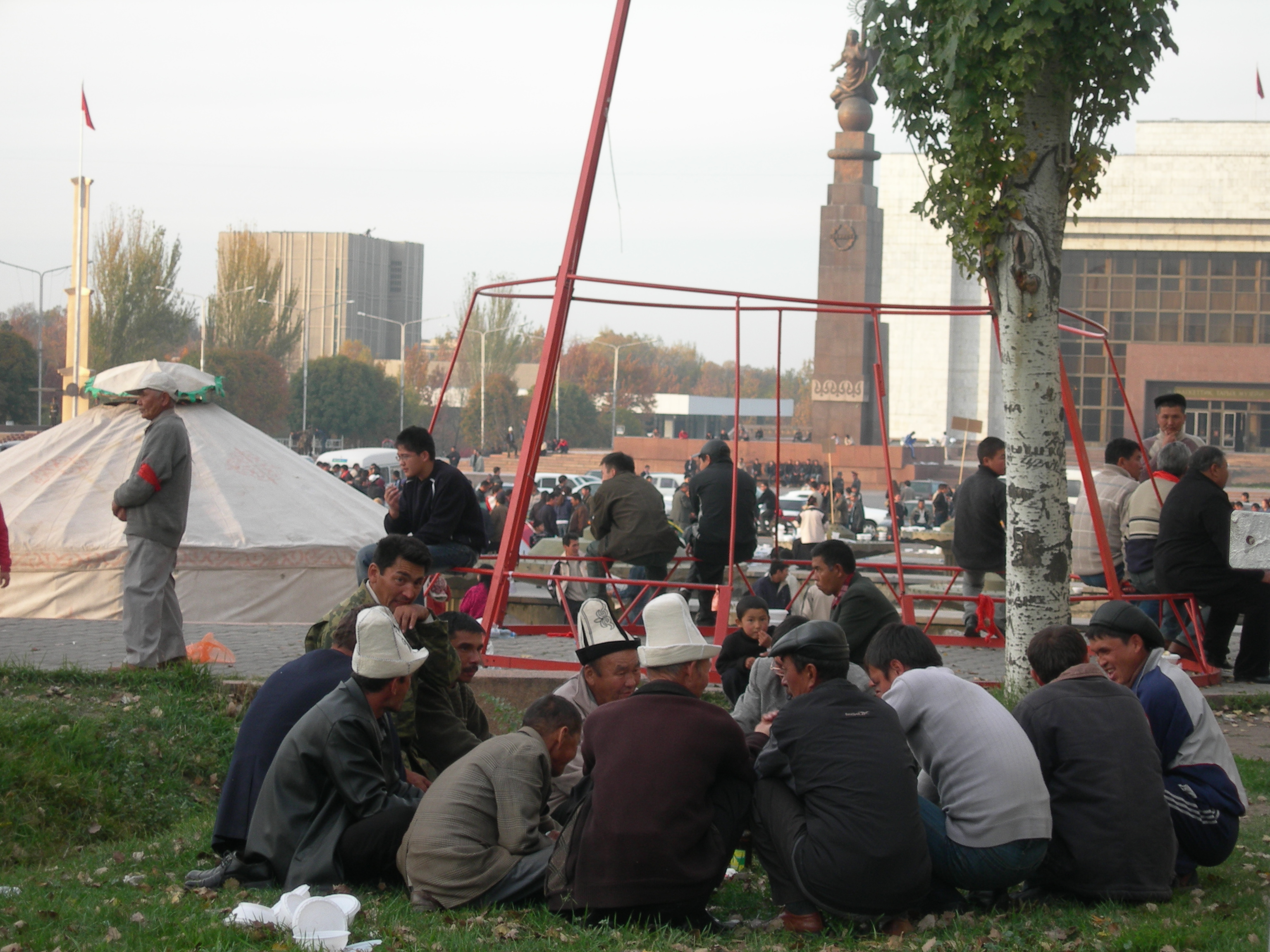


Timeline
- 1991: Independence, President Askar Akayev
- 2005: Tulip revolution, President Kurmanbek Bakiev
- 2010: April revolution, President Roza Otunbayeva
- 2010: Violent clashes in Osh and Jalalabad
- 2011-2017: President Almazbek Atambayev
- 2017: President Sooronbay Zheenbekov
- 2020: Third Revolution, President Sadyr Japarov
- 2021: Constitutional amendments, reversal of previous reforms